Qualicoat Class 1 vs Class 2 Corrosion Resistance Standards
Coastal environments in Queensland (such as the Gold Coast, Brisbane bay regions, and Cleveland) place massive corrosive stresses on architectural aluminium. Choosing the correct powder-coating rating and chemical pre-treatment standard is essential to prevent filiform corrosion, peeling, and UV chalking.
Qualicoat Classification & Durability Class
The Qualicoat organization sets international standards for organic coatings on architectural aluminium. The standard defines powder classes according to weathering resistance:
- Class 1 Powders (Standard Durability): Tested for 1 year in Florida weathering. Suitable for mild inland settings. Expected color retention and gloss duration is 5–10 years.
- Class 2 Powders (Super Durable): Tested for 3 years in Florida weathering. Formulated with super-durable polyester resins. Expected color retention and gloss duration is 15–25 years under high UV radiation and seaside salinity.
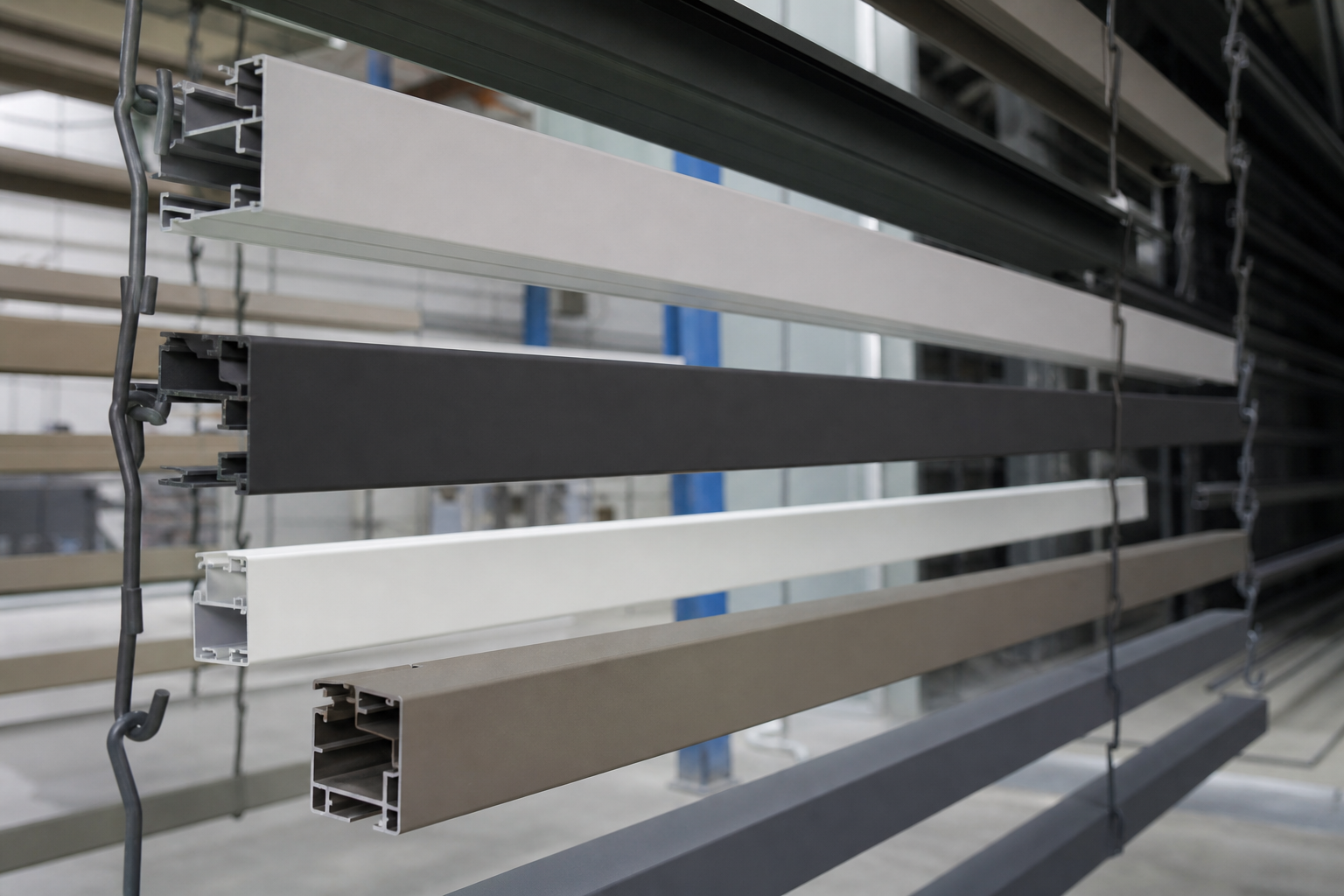
Class 2 super-durable powders (such as Dulux Duratec or Interpon D2525) maintain gloss retention and resist fading at least three times longer than Class 1 standard polyester powders, making them vital for custom-designed Queensland sunrooms, carports, and coastal residential doors.
Surface Treatment Specification Matrix
| Treatment Spec | Thickness (μm) | Salt Spray Limit (ASTM B117) | Applicable Zone |
|---|---|---|---|
| Class 1 Standard Coating | 60 - 70 microns | 1,000 Hours (no blistering) | Inland (>5km from coast) |
| Class 2 Super Durable | 70 - 90 microns | 2,000 Hours (no blistering) | Coastal (100m to 5km) |
| Class 2 Marine Sealant Prep | 80 - 100 microns | 3,000 Hours (high performance) | Seaside (<100m high marine) |
Chemical Pre-treatment and Micron Profiles
No powder coating will adhere without proper chemical pre-treatment. When aluminium extrusions emerge from the extrusion press, they carry surface oxides, machine lubricants, and ambient contaminants.
TS Aluminium uses a rigorous multi-stage pre-treatment wash in our Slacks Creek workshop. Extrusions are immersed in an acid degreasing bath, followed by water rinses, a chromate-free chemical conversion bath (which deposits a thin metallic passivation layer to inhibit oxidation), and a final demineralized water rinse. The parts are dried in a de-moisturizing oven prior to electrostatic powder spray application. This guarantees maximum mechanical adhesion and corrosion resistance.
Document Stats
Topic: Metallurgy & Coatings
Audience: Architects & Builders
Standard: AS 3715, Qualicoat V2.0
Workshop: Slacks Creek, QLD
Frequently Asked Questions
How is the quality of our Insight 3 system verified?
All our Insight 3 components undergo strict Vickers hardness indentation testing and dimensional tolerance checks in compliance with AS/NZS 1866:1997 standards.
What warranties apply to our Insight 3 range?
We provide a 10-year structural warranty on all architectural profiles in the Insight 3 range, backed by Dulux accredited powder coat finishes.
Are CAD drawings available for Insight 3?
Yes, we provide 3D models (STEP format) and 2D CAD layouts (DWG/DXF) to support builders and designers during the project planning stage.
Related Projects & Case Studies
Slacks Creek Insight 3 Installation
Engineering and assembly of high-strength Insight 3 framework designed to satisfy local Region B wind ratings.
Gold Coast Commercial Insight 3 Project
Volume supply and custom CNC processing of Insight 3 profiles matching QBCC structural regulations.
Request Engineering Specification
Submit your project dimensions, wind zone parameters, or target specs. Our Slacks Creek team will review and reply within 24 hours.
Extended Scientific Review & Materials Engineering Discussion
Materials science plays a crucial role in architectural aluminium engineering. For clear-anodized profiles, the oxide layer (Al2O3) is established using an electrochemical acid bath. The anodizing thickness (AA15 or AA25) establishes a barrier against marine salt corrosion. The AA25 marine-grade class specifies a 25-micron thickness, which is highly resistant to coastal weathering and chalking under salt spray environments.
For double-glazed joinery, thermal performance is evaluated using overall frame U-values and solar heat gain coefficients (SHGC). Our high-performance suites incorporate polyurethane thermal breaks crimped between the inner and outer aluminium profiles. This thermal barrier stops heat conduction through the frame, reducing cooling loads. When combined with double glazing (6mm Low-E outer - 12mm Argon cavity - 4mm inner), frame U-values are reduced to 1.85 W/m²·K, ensuring energy efficiency.
For electrostatic powder coating, the thermoset polymer must achieve complete cross-linking during baking. Our lab performs MEK solvent rub tests to verify that the coating is fully cured. By matching materials testing with localized QLD building regulations, our technical reviews provide builders and design professionals with verified structural specifications.